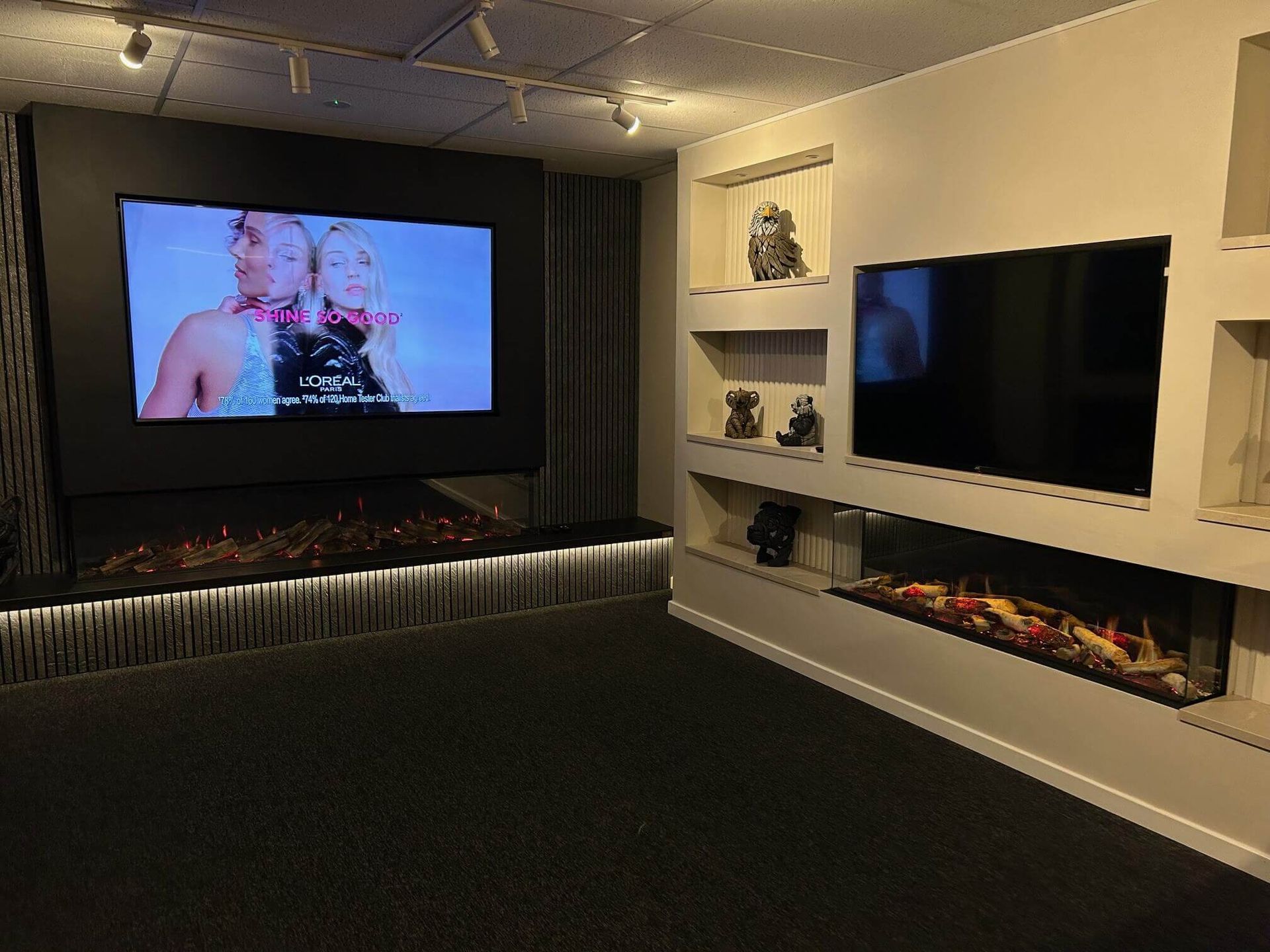
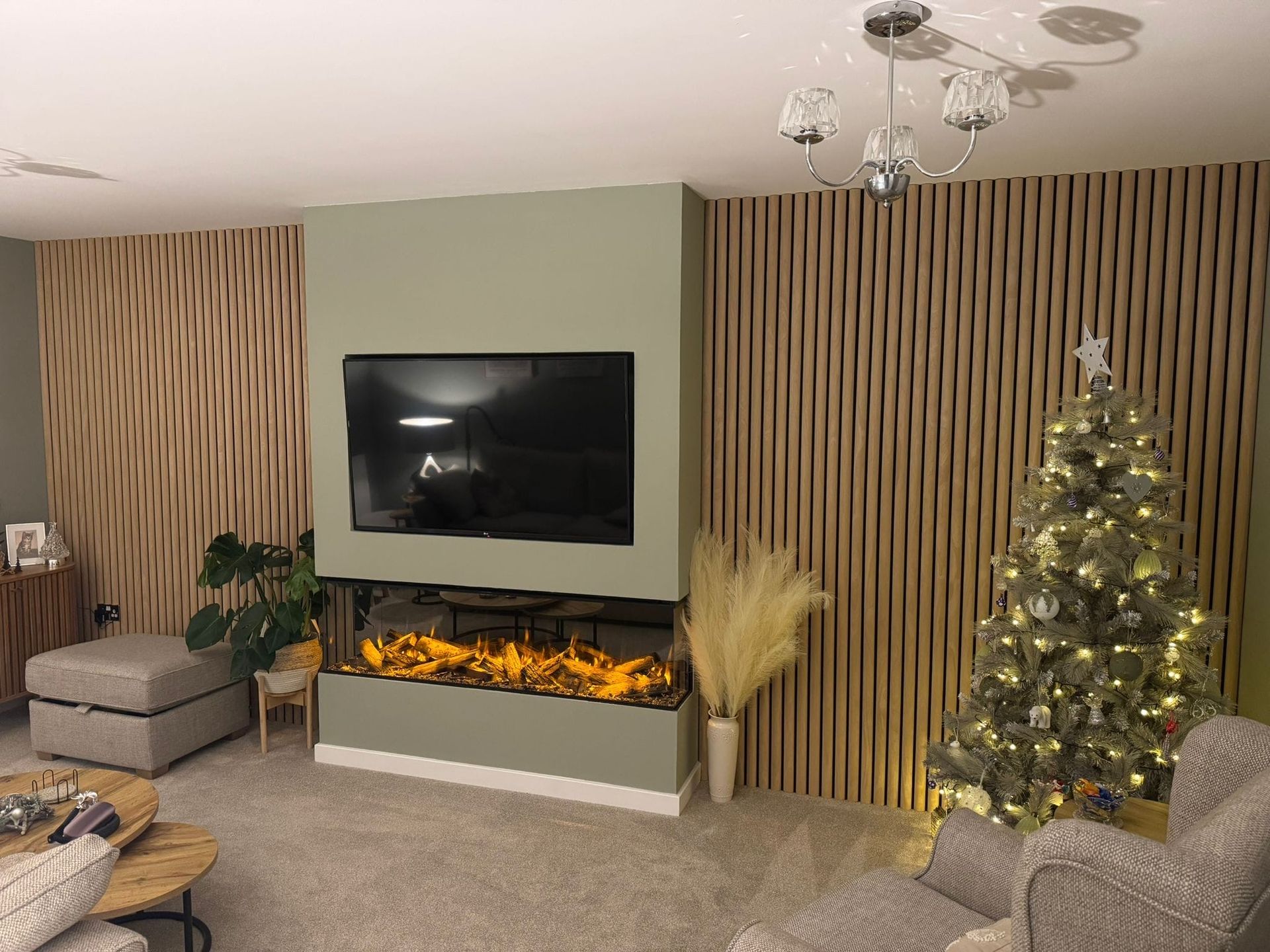
How to Plan a Media Wall Fire: The Complete Before-You-Buy Guide
How to Plan a Media Wall Fire: The Complete Before-You-Buy Guide
If you are thinking about adding a media wall fire to your home, the most important work happens before you choose a model or start building. A well-planned media wall can look clean, add a focal point to your room and avoid expensive changes later.
This guide walks through the key planning steps in the right order so you can decide what to buy with confidence.
Quick answer: what should you plan before buying a media wall fire?
Before buying a media wall fire, you should plan the wall location, room measurements, fire size, TV size, power supply, ventilation, materials, cable routes, and installation method.
Step 1: Decide what the media wall needs to do
Start with function, not style. Ask these questions first:
- Will the media wall be the main focal point of the room?
- Will it include only a TV and fire, or also shelves, storage, or lighting?
- Is the room used for everyday living, entertaining, or occasional use?
Your answers affect can affect decisions later, including the fire type, wall depth, materials, and budget.
Step 2: Measure the room and the wall properly
Take full room and wall measurements before comparing products. Record:
- TV Size and width of TV
- Wall width
- Ceiling height
- Available depth
- Distance from seating to TV wall
- Door, window, radiator, and socket positions
The TV size usually dictates the size of the electric fire. The fire ideally would be wider than the TV, or the same width. It can look top-heavy if the electric fire is smaller than the TV.
Do not estimate. Exact measurements help you avoid buying a fire that looks too small, too large, or too deep for the wall design.
Why room size matters
A large room can make a small fire look lost. A narrow room can make an oversized feature wall feel dominant and reduce circulation space. Good proportion is just as important as the product itself.
Step 3: Choose the right location
The best location is usually a wall that offers comfortable TV viewing, strong visual balance, and practical access to power. When choosing the wall, consider:
- Whether the TV can be viewed comfortably from the main seating area
- Whether the fire will sit centrally in the room layout
- Whether there is enough wall width for the full design
- Whether building the false chimney breast will block walkways or furniture placement
A media wall should improve the room layout, not force it.
Common question: can a media wall fire heat a room?
Many electric media wall fires can provide useful supplemental heat, but they are not always intended to replace a primary heating system. Check the rated heat output and use case before buying.
Step 4: Pick the right fire size for the wall
One of the biggest planning mistakes is choosing the fire too early. First decide the likely width and style of the overall media wall, then select a fire that suits those proportions.
In general:
- A wider feature wall usually suits a longer landscape fire
- A smaller room often benefits from a simpler, more compact design
- The fire should look intentional beneath the TV, not squeezed in or visually disconnected
Always check the manufacturer’s installation dimensions, not just the visible front size.
Step 5: Plan TV placement carefully
TV position is one of the most important comfort and safety decisions in a media wall design.
Questions to answer before fixing the TV position
- How high will the TV sit from finished floor level?
- Will the screen be comfortable to watch from your normal seating position?
- What minimum distance is required between the fire opening and the TV?
- Does the fire manufacturer provide explicit clearance guidance?
Common question: is it safe to put a TV above a media wall fire?
It can be safe if the fire is designed for that type of installation and the required clearances, construction details, and airflow guidance are followed exactly. Always use the manufacturer’s instructions for the specific model you plan to install.
- All of our fires are electric. When the heater is on it pushes the warm air out into the room, rather than going upwards straight away (which can heppn with traditional fires/log burners/gas fires.
Step 6: Confirm power supply and cable planning
Electric media wall fires need safe, practical power access. Your TV, soundbar, lighting, streaming devices, and consoles may also need hidden cable routes.
Plan in advance for:
- Electrical supply location
- Socket access
- TV power cable routing
- HDMI and data cable routing
- Access for future maintenance or upgrades
If cables are an afterthought, the finished wall may be harder to service and less tidy.
Step 7: Understand ventilation, airflow, and clearances
Clearances are not optional. A media wall fire installation depends on enough airflow around the appliance and sufficient spacing from surrounding materials and equipment.
Check:
- Required recess dimensions
- Ventilation requirements
- Clearance above and around the unit
- Restrictions on shelf position or TV distance
- Whether the wall construction needs specific openings or gaps
These details vary by model. Read the installation manual before any framing begins.
Step 8: Choose suitable build materials
The structure around the fire should be built with materials suitable for the installation requirements of the chosen appliance. The installer or builder should confirm what is appropriate for framing, boarding, finishing, and heat management.
Typical planning considerations include:
- Frame construction method
- Board type and finish
- Weight support for the TV
- Access panels where needed
- Durability around the fire opening
Material choices should follow the fire manufacturer’s instructions and local installation standards.
Step 9: Decide whether you want storage, shelving, or lighting
Many media walls include alcoves, shelves, cabinetry, or LED lighting. These features can improve the overall look, but they also affect width, symmetry, build cost, and cable planning.
Before including extras, ask:
- Do you want open shelving or closed storage?
- Do you need space for a soundbar, media box, or decor?
- Will built-in lighting require extra wiring?
Keep the design practical. The best media walls feel clean and balanced, not overcrowded.
Step 10: Decide who will install it
Some homeowners arrange separate trades for the build, electrics, and finishing. Others prefer a single installer or contractor to manage the project.
Before committing, ask the installer:
- Have you built media walls using this type of fire before?
- Will you follow the manufacturer’s installation requirements exactly?
- Who handles electrics and final connections?
- Will cable access and maintenance be built in?
- What happens if the final dimensions need adjustment?
Good planning reduces surprises, but a knowledgeable installer still matters.
Common mistakes to avoid
- Starting to build the media wall before having the fire there
- Buying the fire before planning the wall dimensions
- Mounting the TV too high
- Ignoring required clearances
- Underestimating cable management
- Choosing a wall that disrupts the room layout
- Assuming all fires suit TV-above installations
- Forgetting to budget for the full build, not just the appliance
Frequently asked questions
What size media wall fire should I choose?
Choose a fire size that matches the width and scale of the finished media wall, not just the TV size. Always check both the visible dimensions and the installation recess requirements.
Do I need ventilation in a media wall?
Yes, if the product instructions require it. Ventilation and airflow requirements vary by model, so always follow the installation manual.
Should I buy the TV or the fire first?
It is usually best to plan the full wall first, then confirm both the TV and fire dimensions against the design before buying.
Can I build a media wall on any wall?
Not always. The wall needs enough width, practical power access, and a layout that supports safe viewing and installation requirements.
Final checklist before you buy
- Room and wall measured accurately
- Wall location chosen
- Purpose of the fire defined
- Heat expectations confirmed
- Fire size checked against wall design
- TV position planned
- Power and cable routes planned
- Ventilation and clearances reviewed
- Materials and construction approach confirmed
- Budget set for the full project
- Installer questions answered
Bottom line
The best media wall fires are not chosen in isolation. They are selected as part of a complete plan that considers room size, viewing comfort, heat needs, wall proportions, electrical access, ventilation, and installation details. If you work through these steps before buying, you will make better product decisions and end up with a media wall that looks right, works properly, and is easier to install.
If you are comparing options now, use this guide as your planning checklist first, then shortlist products that fit your room, layout, and installation requirements.
Recent Posts